
The most common signs of a slab leak include an unexplained rise in your water bill, warm or damp floors, running-water sounds when fixtures are off, lower water pressure, musty odors, damaged flooring, and water collecting near the foundation.
One sign alone does not prove you have a slab leak. However, several symptoms together are a good reason to have the plumbing checked. In this blog, we’ll cover common slab leak symptoms, how to check for a hidden leak, how plumbers locate it, possible repairs, and when to shut off your water.
What Is a Slab Leak?
A slab leak is a leak in a water supply pipe located beneath or within a home’s concrete slab foundation. Because the pipe is hidden, the first clue is often a change elsewhere in the home, such as unexplained moisture, unusual warmth, higher water use, or reduced water pressure.
An under-slab water leak can affect either a hot-water or cold-water line, and the symptoms may differ depending on which pipe is leaking. Hot-water leaks may create warm spots on the floor, while cold-water leaks may be easier to notice through water-meter movement, dampness, or other changes in the plumbing system.
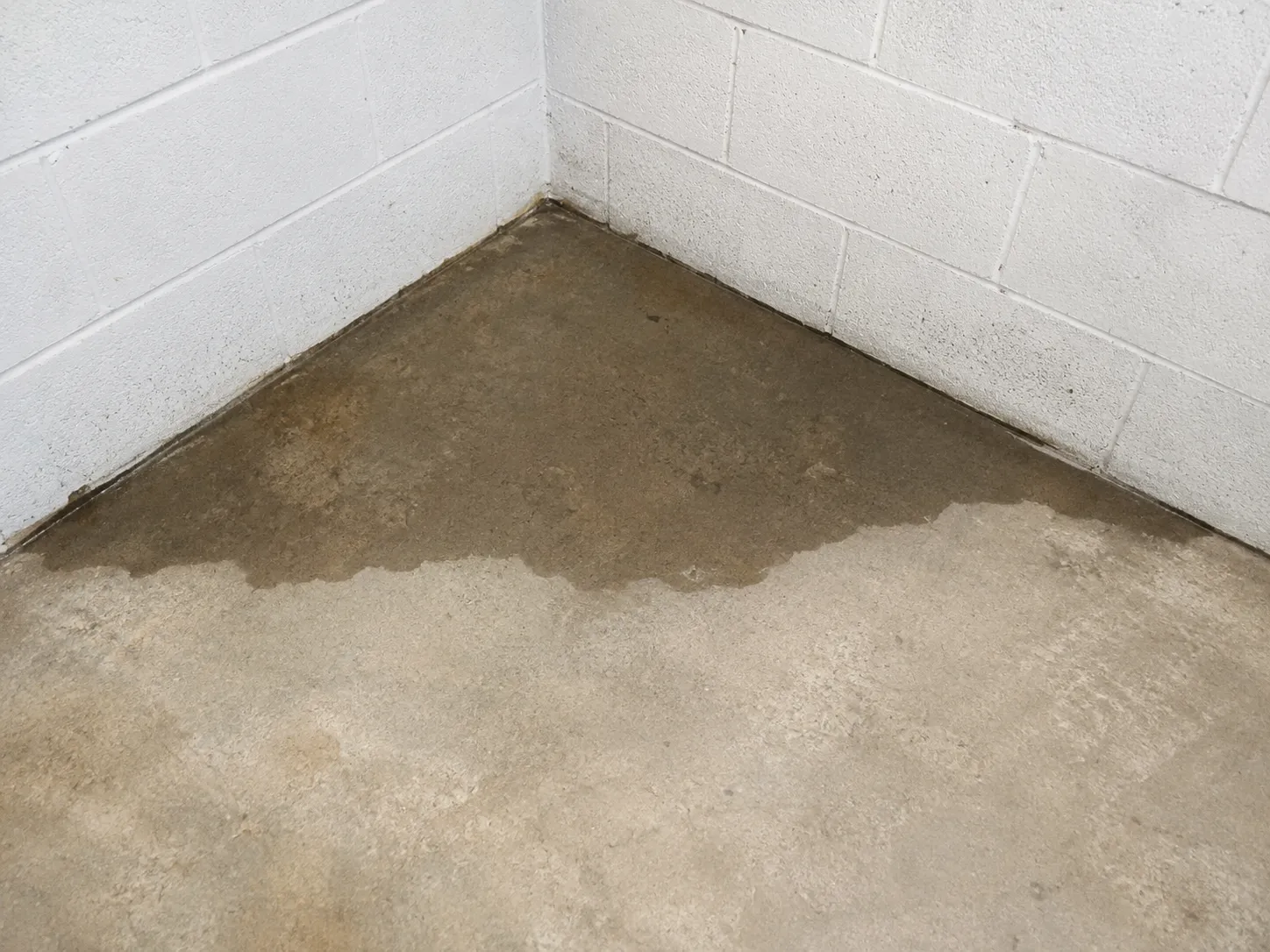
Common Slab Leak Warning Signs
Watch for these slab leak warning signs:
- An unexpected increase in your water bill
- Water-meter movement while all fixtures are off
- Warm or damp spots on the floor
- Discolored or damaged flooring
- Running or hissing water sounds
- Lower water pressure
- Musty odors or mold growth
- Water collecting near the foundation
The U.S. Environmental Protection Agency recommends checking the water meter before and after a period when no water is being used. A changing reading may indicate a leak.
Hot-Water vs. Cold-Water Slab Leak Symptoms
A hot-water line leak may create a warm spot on tile, concrete, or other flooring. A cold-water leak may be harder to notice and may first show up as meter movement, dampness, reduced pressure, or higher water use.
A warm floor alone does not prove there is a slab leak. The sign becomes more meaningful when it appears with other plumbing symptoms.
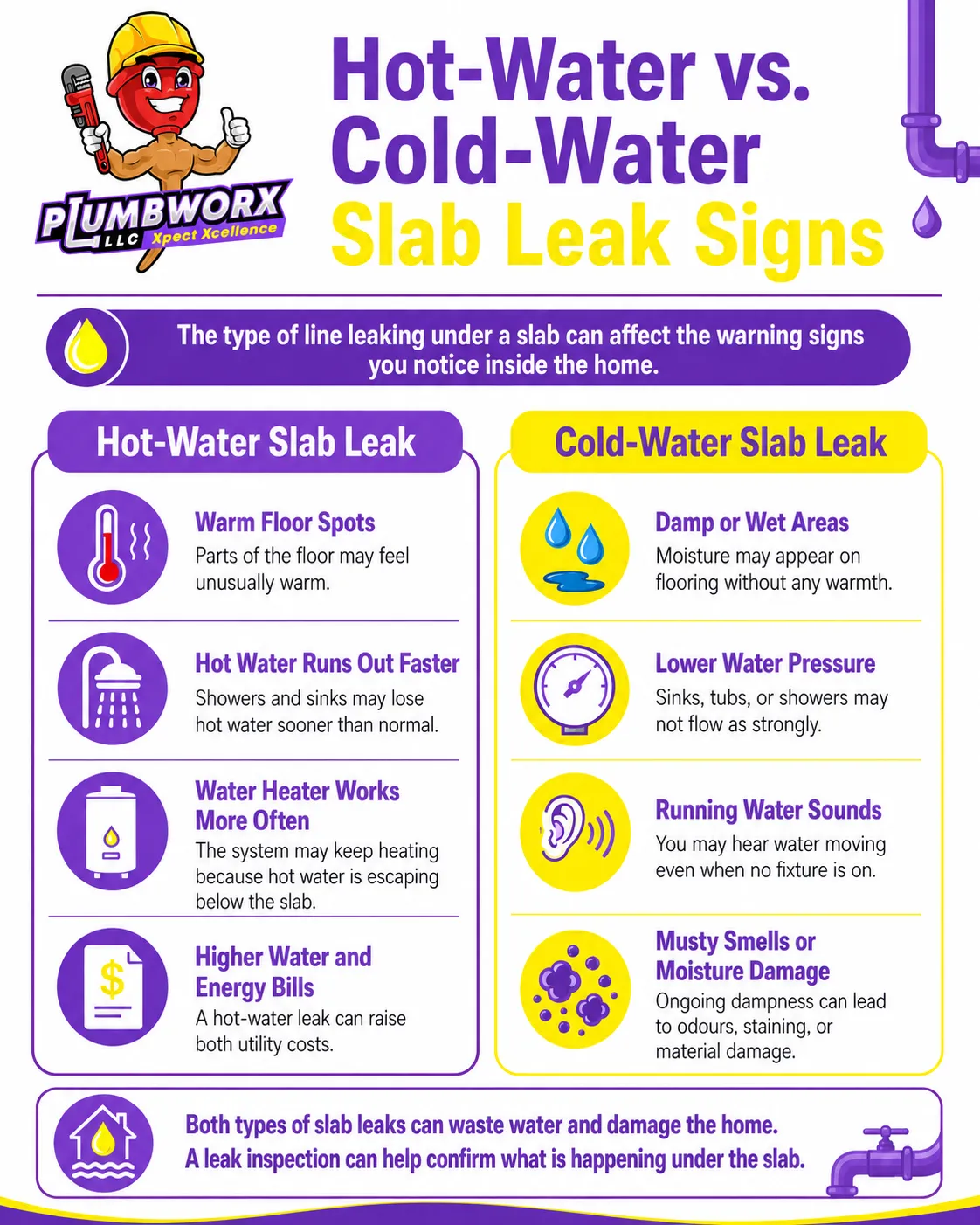
Why Is My Floor Warm or Damp?
An unexplained warm or damp area can point to a hidden water leak. A leaking hot-water line may transfer heat through the concrete, while either hot or cold water can affect flooring, grout, baseboards, or nearby walls.
Before assuming the leak is under the slab, check nearby sinks, toilets, showers, appliances, the water heater, and HVAC equipment. If no surface source is visible and the moisture keeps returning, professional inspection can help locate the cause.
How to Check for a Possible Hidden Water Leak
A simple meter test can help you check for unexplained water use:
- Turn off all faucets and water-using appliances.
- Make sure toilets are not filling.
- Record the water-meter reading.
- Avoid using water for a period of time.
- Check the meter again.
If the reading changes, a leak may be present. EPA guidance recommends water-meter monitoring as a way to identify possible hidden leaks. This does not confirm a slab leak. A toilet, irrigation line, appliance, or another hidden pipe could also be responsible. When learning how to detect a slab leak, the meter test is best used as a first step.
How Plumbers Detect a Slab Leak
Plumbers typically start by ruling out visible leaks and checking the plumbing system for signs of hidden water loss. They may inspect fixtures, test pressure, isolate parts of the system, and use specialized equipment to narrow down the leak location.
Acoustic equipment can help identify sounds made by water escaping from a pressurized pipe. The U.S. Department of Energy also notes the use of listening devices and leak correlators for locating water-line leaks.
Thermal imaging may also help identify temperature differences caused by hot-water leaks. The goal of slab leak detection services is to narrow down the likely location before opening flooring or concrete.
What Causes Pipes Beneath a Slab to Leak?
Possible causes include:
- Pipe deterioration or corrosion
- Failed fittings or connections
- Physical pipe damage
- Long-term stress or movement
- Water-pressure problems
- Age-related wear
The exact cause cannot always be determined from symptoms alone. Pipe material, age, installation, and the location of the failure can all matter.
What Happens If a Slab Leak Is Ignored?
A continuing leak can waste water and allow moisture to spread into flooring, walls, or other materials. EPA guidance notes that moisture on floors, walls, or ceilings can indicate hidden plumbing leaks.
Possible effects include:
- Damaged flooring and finishes: Moisture can stain, warp, loosen, or damage flooring and nearby materials over time.
- Musty odors: Hidden moisture can create persistent damp smells, even when you cannot see standing water.
- Mold growth: Ongoing moisture can create conditions where mold may develop on or around affected materials.
- Higher water use: A continuous leak can increase household water consumption and lead to higher utility bills.
- Wider moisture damage: Water can spread beyond the original leak area and affect more of the surrounding flooring, walls, or finishes.
If several slab leak symptoms appear together, it is better to investigate the source than wait for visible damage.
How Are Slab Leaks Repaired?
The best repair depends on where the leak is located, the condition of the pipe, and how much of the plumbing system is affected. Once the leak is located, a plumber can recommend the most practical repair approach.
| Repair approach | What it involves |
| Direct repair | Accessing the leaking area and repairing or replacing the damaged section of pipe. |
| Rerouting | Installing a new pipe path that bypasses the damaged line beneath the slab. |
| Larger pipe replacement | Replacing a longer section of pipe when the problem is not limited to one small area. |
Not every slab leak requires the same type of repair. A small, isolated leak may call for a direct repair, while a larger plumbing issue may make rerouting or replacing more of the line more appropriate.
Accurate water leak detection and repair helps reduce guesswork before work begins and gives the plumber a clearer picture of which option fits the situation.
When Should You Shut Off the Water?
Shut off the main water supply when water is actively escaping and continued flow could cause more damage.
Examples include:
- Rapidly spreading water
- Significant unexplained flooding
- A suspected pipe rupture
- Water reaching electrical equipment
- Active damage from a hidden leak
For a slow suspected leak without active flooding, a plumber can help determine whether the water needs to stay off during diagnosis.
Get a Suspected Slab Leak Checked in Moore, OK
A higher water bill or one warm floor tile does not automatically mean you have a slab leak. The concern increases when several signs appear together, especially meter movement with fixtures off, unexplained moisture, running-water sounds, or persistent warm flooring. If those symptoms point toward a hidden leak, schedule a plumbing inspection before deciding what needs to be repaired.
PlumbWorX provides water leak and slab leak services for homeowners in Moore, OK. We focus on troubleshooting plumbing problems and identifying the source before discussing repair options.
Slab Leak FAQs
1. Can a slab leak happen without visible water?
Yes. Water can stay beneath flooring or within the slab area before it becomes visible inside the home. Early signs may include movement on the water meter, unusual running-water sounds, higher water use, reduced pressure, or a warm or damp area on the floor. Because the leak is hidden, these clues may appear before you ever see standing water.
2. Can a slab leak stop on its own?
A damaged pressurized pipe should not be assumed to have repaired itself. The symptoms may seem to come and go depending on water use, pressure, or where the water is traveling beneath the slab. Even if the signs become less noticeable, the suspected leak should still be checked so the source can be confirmed and repaired if needed.
3. Does a high water bill always mean a slab leak?
No. Other causes include:
- A running toilet
- A dripping faucet
- An irrigation leak
- A leaking appliance connection
- Another hidden supply-line leak
A meter test can help confirm whether unexplained water use is occurring.
4. Can I locate a slab leak by touching the floor?
Not reliably. A warm or damp area may provide a clue, but other heat and moisture sources can cause similar symptoms. If you are noticing possible slab leak symptoms, call Plumbworx to discuss what you are seeing and arrange an inspection.
5. Will a plumber have to break the concrete to find the leak?
Not necessarily. Plumbers can often use pressure testing, system isolation, acoustic equipment, and other diagnostic tools to narrow down the suspected location before any concrete is opened.
These methods help reduce unnecessary disruption and give the plumber a better idea of where the leak may be located. Concrete may still need to be accessed for certain repairs, but leak detection is usually focused on identifying the problem area as accurately as possible first.